SCENESSCENESSCENESSCENES
    0
  •   was successfully added to your cart.
  • Home
  • Country
  • Pop
  • Rock
  • Americana
  • R&B
  • Culture
  • Premium
  • About
  • Contact
    • Music Submissions
    • Advertising
      • Media Kit
    • Customer Support
  • Shop

The Myth of the Pagan Origins of Christmas

    Home Culture The Myth of the Pagan Origins of Christmas

    The Myth of the Pagan Origins of Christmas

    By Daniel Lattier | Culture, Feature | Comments are Closed | 2 December, 2017 | 0

    It’s generally accepted that early Christians adopted December 25th as the day of Christ’s birth to co-opt the pagan celebration of the winter solstice. Some believe this fact undermines Christianity.

    But according to Professor William Tighe, this “fact” may actually be a myth.

    Based on his extensive research, Tighe argues that the December 25th date “arose entirely from the efforts of early Latin Christians to determine the historical date of Christ’s death.” He also goes so far as to claim that the December 25th pagan feast of the “’Birth of the Unconquered Sun’… was almost certainly an attempt to create a pagan alternative to a date that was already of some significance of Roman Christians.”

    Tighe explains…

    In the Jewish tradition at the time of Christ, there was a belief in what they called the “integral age” — that the prophets had died on the same days of their conception or birth. Early Christians spent much energy on determining the exact date of Christ’s death. Using historical sources, Christians in the first or second century settled on March 25th as the date of his crucifixion. Soon after, March 25th became the accepted date of Christ’s conception, as well.

    Add nine months — the standard term of a pregnancy — to March 25th, and Christians came up with December 25th as the date of Christ’s birth.

    It is unknown exactly when Christians began formally celebrating December 25th as a feast. What is known, however, is that the date of December 25th “had no religious significance in the Roman pagan festal calendar before Aurelian’s time (Roman emperor from 270-275), nor did the cult of the sun play a prominent role in Rome before him.” According to Tighe, Aurelian intended the new feast “to be a symbol of the hoped-for ‘rebirth,’ or perpetual rejuvenation, of the Roman Empire…. [and] if it co-opted the Christian celebration, so much the better.”

    As Tighe points out, the now-popular idea that Christians co-opted the pagan feast originates with Paul Ernst Jablonski (1693-1757), who opposed various supposed “paganizations” of Christianity.

    Of course, to Christians, it really doesn’t matter that much whether or not they co-opted December 25th from the pagans, or vice versa. The Christian faith doesn’t stand or fall on that detail. But it’s nevertheless valuable for all of us to give closer scrutiny to shibboleths — such as that of the pagan origins of Christmas — which are continually repeated without being examined.

     ​

    This column originally appeared at Intellectual Takeout. It is reprinted with permission.
    Christmas, Paganism, Saturnalia, solstice, Yuletide

    Related Post

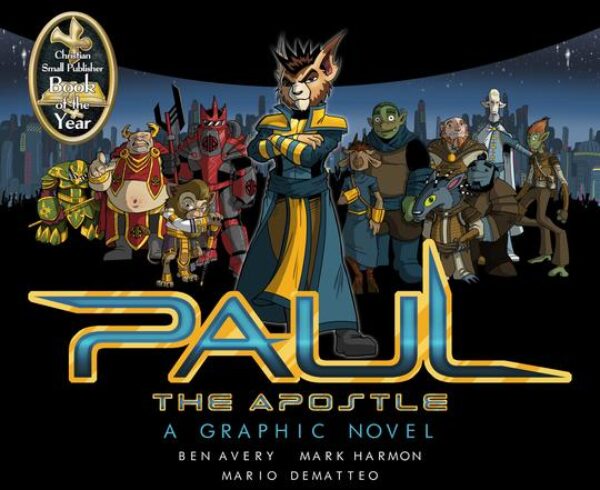
    • You Won’t Believe The Story Behind this Graphic Novel Sensation…

      By Elizabeth Kennedy Ryzewicz | Comments are Closed

      One of the freshest talents emerging in the graphic novel space also has one of the most extraordinary personal stories…

    • The Anti-PC: An Emerging Genre in NYC Playwriting

      By Christopher Atamian | Comments are Closed

      Noted playwright Larissa Fasthorse brings some Thanksgiving fun and a fresh new genre to the New York City theater scene with her farcical The Thanksgiving Play.

    • Tim Tebow: The Unlikely Entertainment Icon

      By Chad Bonham | Comments are Closed

      This Heisman Trophy winner and professional athlete turned broadcaster, author, and philanthropist says servant leadership is the key to his success.

    • Celebrating Pirandello in New York

      By Christopher Atamian | 1 comment

      SCENES New York City writer Christopher Atamian covers Theatre 71’s ensemble presentation of “Raison d’Etre: an Evening of Pirandello,” directed by Patrick Mulryan.

    • What’s The Small Buzzy Performing Arts Group in Malibu That Has The Today Show Gushing?

      By Elizabeth Kennedy Ryzewicz | Comments are Closed

      What is it about the small, revolutionary non-profit that Jack Hayford has called “one of the most innovative worship ministries of today,” and has Kathie Lee Gifford gushing on The Today Show? SCENES Media sat down with the Cantinas Arts Foundation leadership to hear what has got the arts, faith and entertainment world talking.

    • Sign up for our Daily Digest, where we deliver the top headlines in music and exclusive SCENES Live Sessions details straight to your inbox!

    Download Sessions and Buy Merch

    • SmithField on SCENES Live Sessions SmithField on SCENES Live Sessions $2.99
    • Sweet Lizzy Project on SCENES Live Sessions Sweet Lizzy Project on SCENES Live Sessions $2.99
    • TRALA on SCENES Live Sessions TRALA on SCENES Live Sessions $2.99
    • The Joy Reunion on SCENES Live Sessions The Joy Reunion on SCENES Live Sessions $2.99
    • JoLivi on SCENES Live Sessions JoLivi on SCENES Live Sessions $2.99
    • Media Kit
    • Privacy Policy
    © 2022 | All Rights Reserved
    • Home
    • Country
    • Pop
    • Rock
    • Americana
    • R&B
    • Culture
    • Premium
    • About
    • Contact
      • Music Submissions
      • Advertising
        • Media Kit
      • Customer Support
    • Shop
    SCENES
      0 items